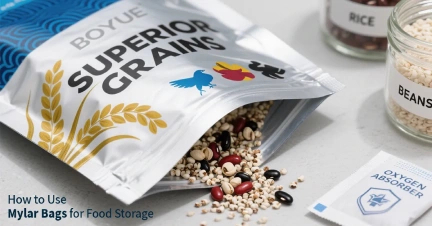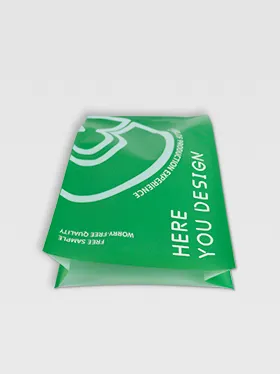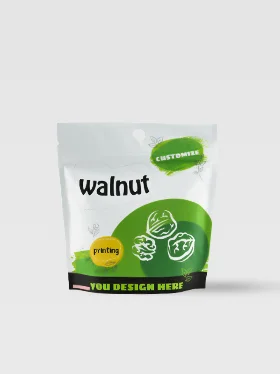
If you're storing food for more than a few weeks, standard plastic bags often aren’t enough.Oxygen slowly gets in, moisture builds up, and product quality begins to decline.
That's why Mylar bags are widely used for food storage. They help create a more controlled environment, which can better preserve freshness, flavor, and shelf life—especially for oxygen-sensitive products.
Strong Protection Against Oxygen, Moisture, and Light
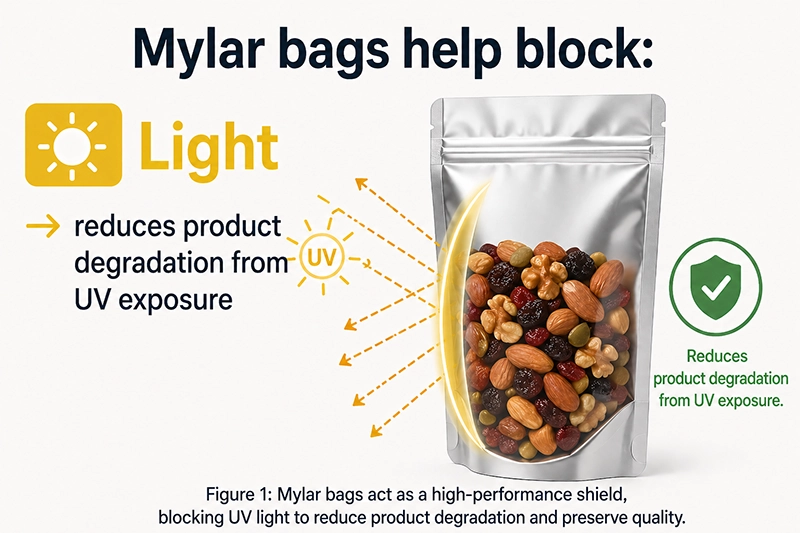
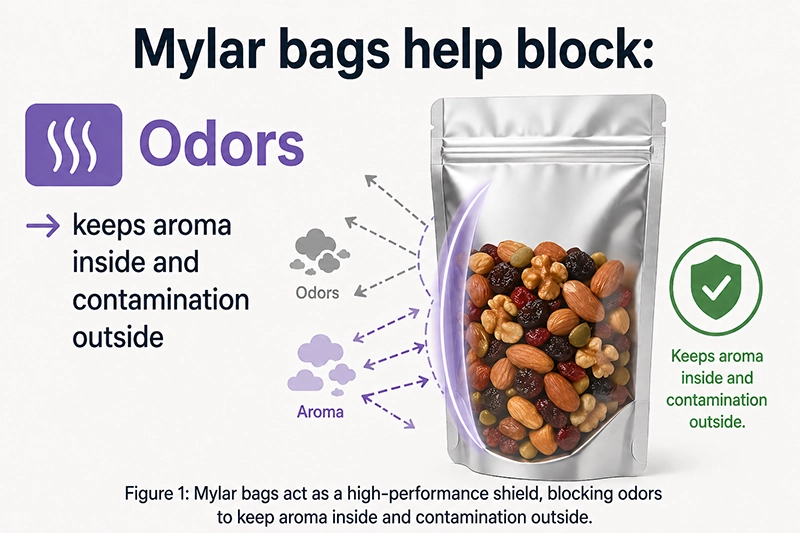
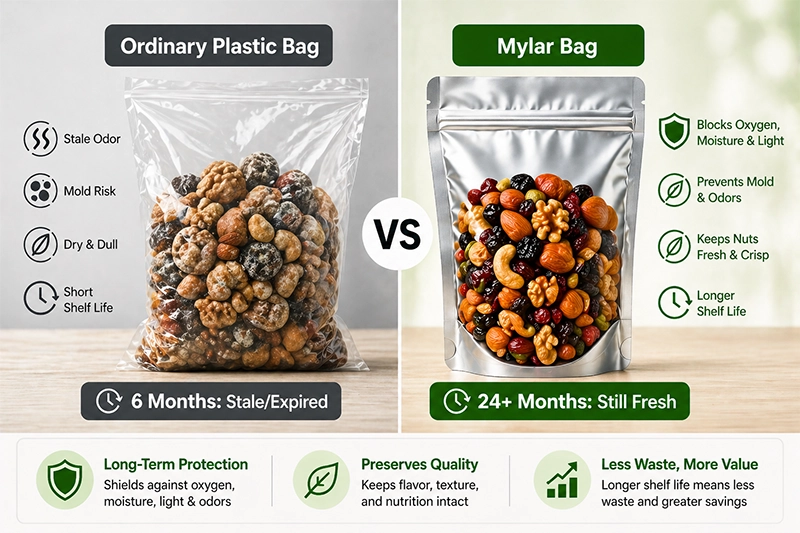
One of the main reasons people choose Mylar bags is their barrier performance.
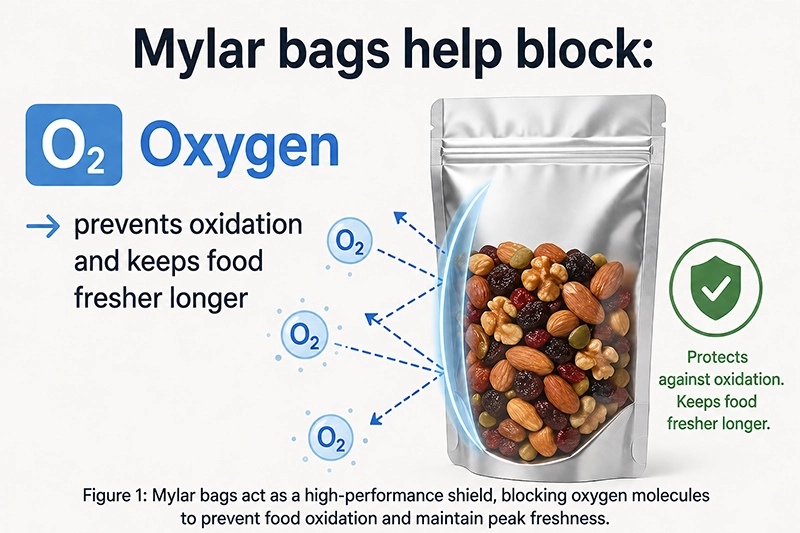
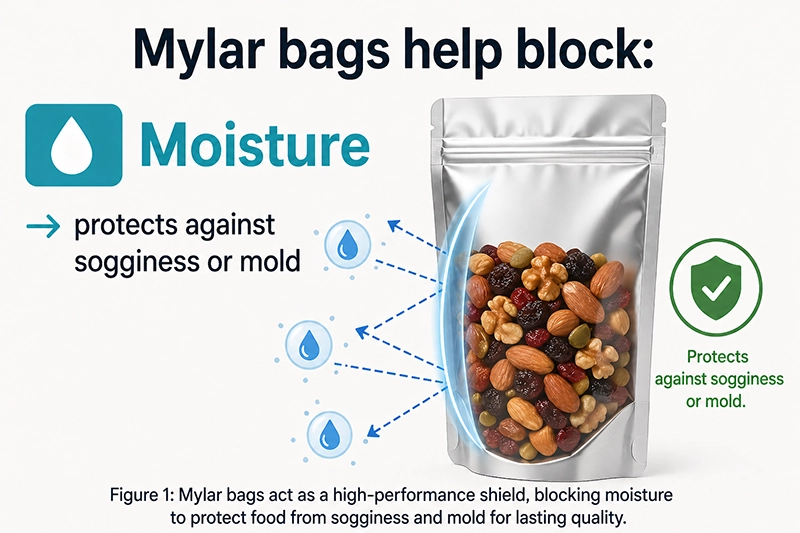
They help block:
- Oxygen → slows down oxidation and flavor loss
- Moisture → reduces risk of mold and texture damage
- Light (UV) → helps prevent product degradation
- Odors → keeps aroma inside and outside contamination away
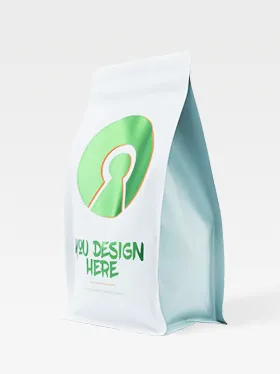
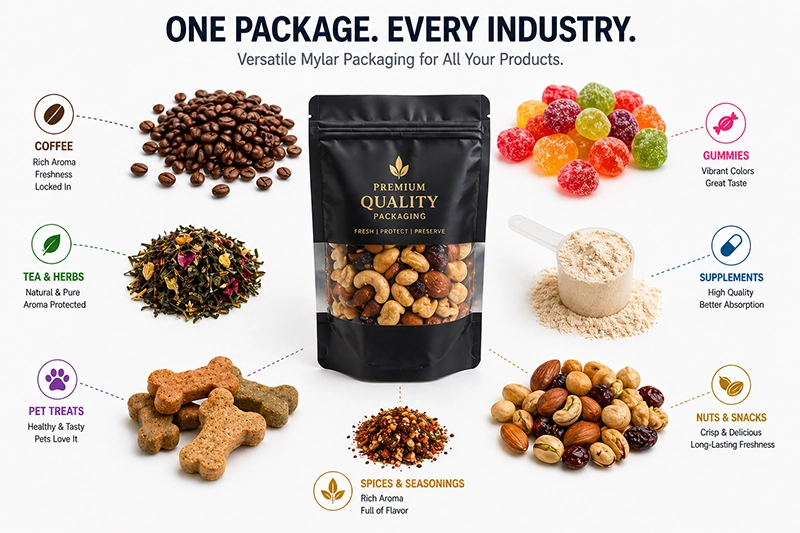
This makes them especially suitable for products like coffee, snacks, dried fruits, spices, and supplements.
Helps Extend Shelf Life (When Used Properly)
Compared with ordinary plastic packaging, Mylar bags provide a much lower oxygen transmission rate, which helps extend shelf life.
However, results depend on:
- the type of food
- storage temperature and humidity
- whether oxygen absorbers are used
Typical examples:
- Dry foods (such as grains or beans) can last for a long time when properly sealed
- Products containing natural oils (such as nuts or coffee) have shorter shelf life due to oxidation
For storage and shipping, this helps maintain more stable product quality.
Practical Features for Daily Use
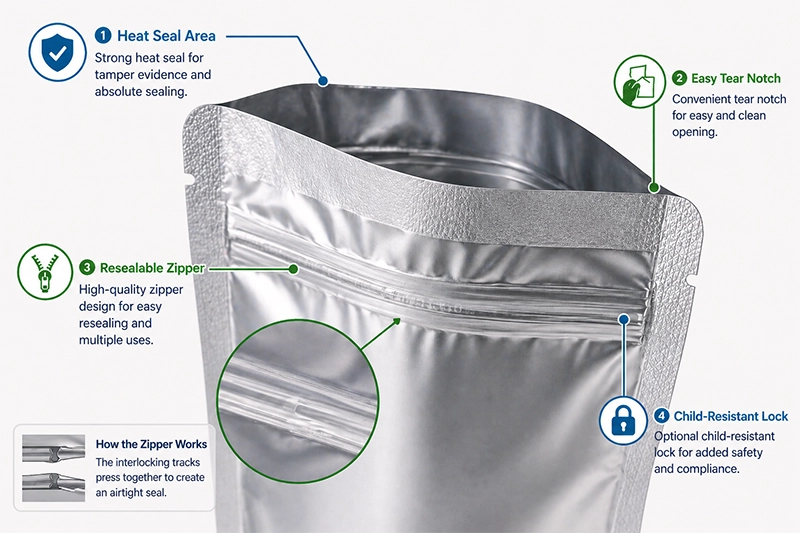
Mylar bags are designed to balance protection and convenience.
Common features include:
- Heat sealable layer for airtight storage
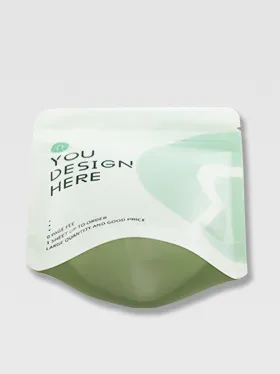
- Resealable zipper for repeated use
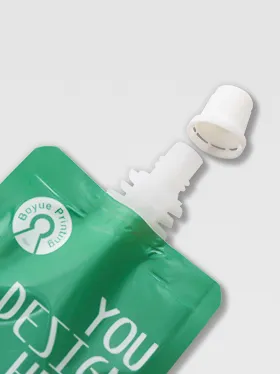
- Tear notch for easy opening
- Child-resistant closures in certain applications
These features improve usability without compromising protection.
Suitable for a Wide Range of Food Products
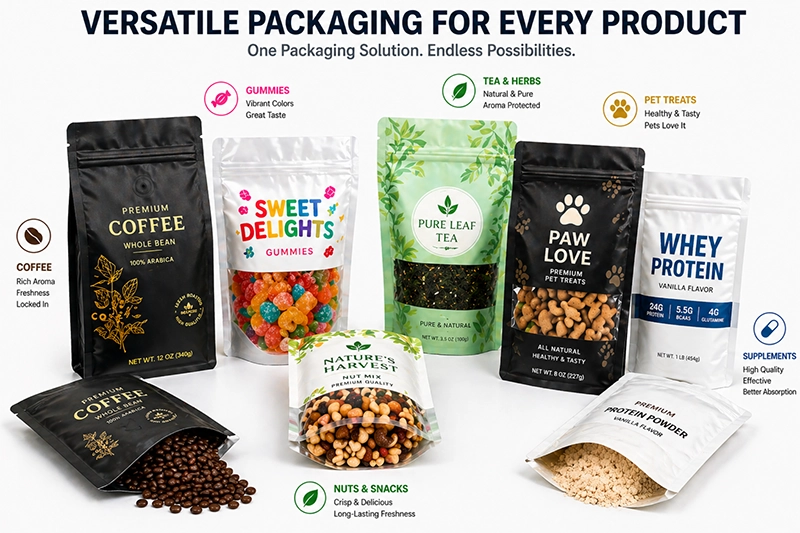
Mylar bags are commonly used for:
- Coffee beans
- Protein powder
- Gummies and candies
- Nuts and snacks
- Spices and tea
- Pet treats
- Dry food ingredients
They are especially useful for products that are sensitive to air, moisture, or light.
Lightweight and Easy to Store
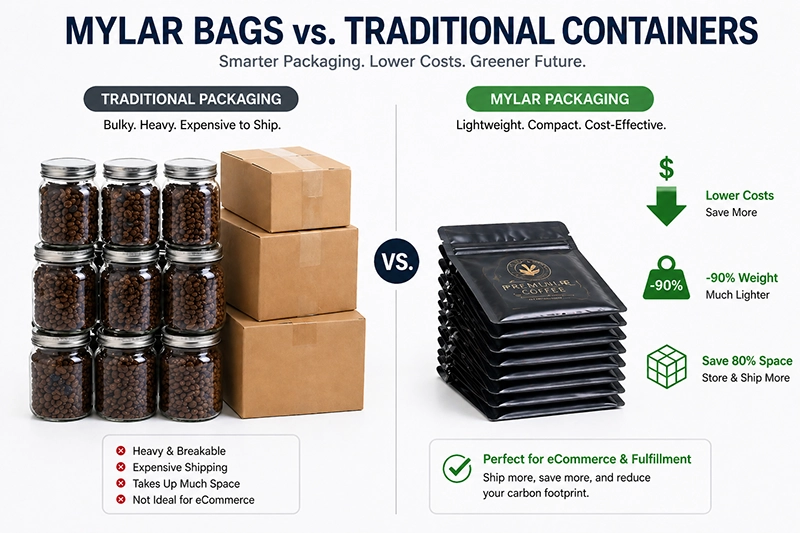
Compared with rigid containers like jars or boxes, Mylar bags are:
- lighter in weight
- easier to store
- more space-efficient
This makes them practical for both home storage and eCommerce shipping.
Mylar Bags vs Plastic Bags vs Vacuum Bags
Here's a simple comparison:
| Feature |
Mylar Bags |
Plastic Bags |
Vacuum Bags |
| Oxygen Protection |
High |
Low |
Medium |
| Moisture Protection |
High |
Medium |
Medium |
| Light Protection |
High |
Low |
Low |
| Durability |
High |
Low |
Medium |
| Long-Term Storage |
Suitable |
Not suitable |
Limited |
Summary:
Mylar bags provide stronger overall protection, especially for long-term storage and oxygen-sensitive products.
How to Choose the Right Storage Method
When deciding how to store food, consider:
- How long you need to store it
- Whether the product is sensitive to oxygen
- Storage conditions (heat, humidity, light)
For longer storage periods, materials with stronger barrier performance are generally more reliable.
FAQ: Mylar Bags for Food Storage
Q1: How long can food last in Mylar bags?
Shelf life depends on the product and storage conditions.
- Dry foods can last much longer when properly sealed
- Foods containing oils typically have shorter shelf life due to oxidation
Using oxygen absorbers and storing in a cool, dry place can help improve results.
Q2: Are Mylar bags better than vacuum sealing?
For long-term storage, Mylar bags often provide more stable protection.
Vacuum bags may:
- be easier to puncture
- allow slow oxygen transmission over time
Mylar bags offer stronger resistance to light and oxygen.
Q3: Can Mylar bags be reused?
Yes, depending on the design.
- Resealable bags are suitable for repeated use
- Heat-sealed bags may be reused if cleaned and resealed properly
Proper hygiene is important when reusing for food.
Final Thoughts
Mylar bags are widely used because they offer a balance of protection, flexibility, and convenience.
For food storage—especially when longer shelf life and product quality are important—they provide a more reliable option compared to standard plastic packaging.