When we talk sustainability with our clients, the most common question we get is: "You say this packaging is eco-friendly, but how do you prove it? Where’s the data?"
Previously, a carbon footprint report cost tens of thousands of RMB and took weeks to deliver. Today, that’s no longer the case.
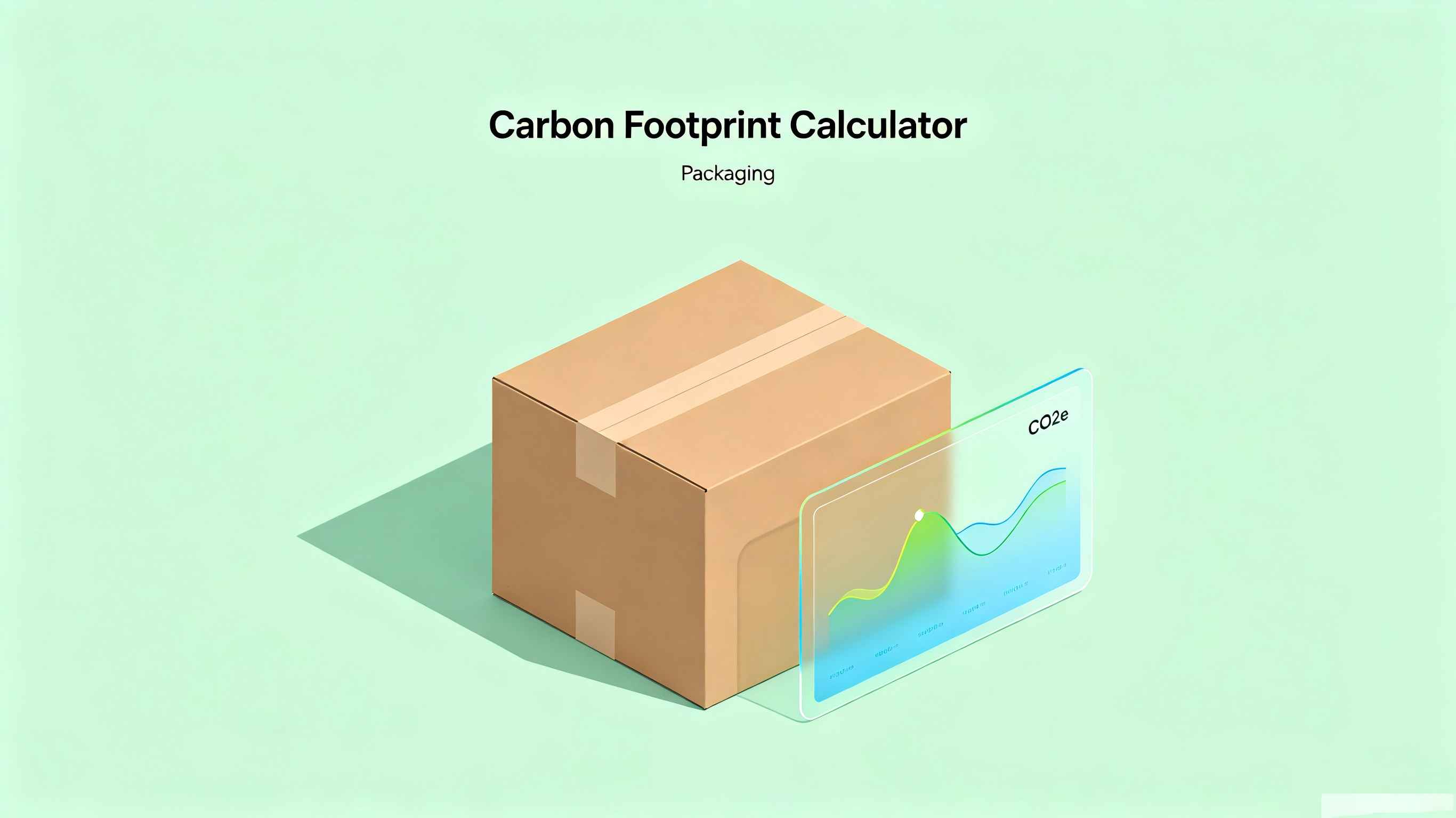
We’re officially launching our Packaging Carbon Footprint Calculator. This isn’t just a marketing gimmick—it’s a real-time calculator built to the ISO 14067 standard. Select your paper type, ink, lamination process, and input your shipping distance. In just 30 seconds, you’ll get the packaging’s "carbon bill" (unit: kg CO₂e per unit), plus you can export a report that meets EU Product Environmental Footprint (PEF) requirements with one click.
Three Key Pillars Behind This Tool:
✅ Verified Data: Core data comes from the globally recognized Ecoinvent Database, covering over 90% of common packaging materials. We don’t rely on estimates—we use authoritative, cited data.
✅ Accurate Modeling: We use a full Life Cycle Assessment (LCA) model, accounting for every stage from raw material extraction, production, and transportation to end-of-life disposal.
✅ Beyond Calculation: The system automatically compares your results against industry benchmarks and provides specific carbon reduction recommendations, such as: "Switching from 250g virgin face paper to 200g recycled paper could reduce carbon emissions by an estimated 15%."
Updates for Professional Partners:
-
An API interface is now available, enabling seamless integration with your ERP or PLM systems to automate supply chain carbon data capture and report generation.
-
We’ve completed beta testing with 10 leading FMCG clients, who’ve given us excellent feedback. Starting Q2 2026, the tool will be available to all clients for free.
Our goal is straightforward: to turn sustainable packaging from a buzzword into measurable, optimizable, and reportable real data. This isn’t just a compliance requirement—it’s a core competitive advantage for the next generation of brands.
Has your brand started measuring product carbon footprints? What’s the biggest challenge you’ve faced in collecting supply chain data? We’d love to hear your thoughts.